

Serving the Greater Boston area
Home care that feels like home
Familiar routines, a caregiver you know, and practical help that lets your family breathe again. After a hospital stay, care can usually start within 24 hours.
One local office. One owner who answers the phone.
Founded by a scientist
A pharmaceutical scientist owns this agency and answers the phone.
Caregivers are our employees
Every caregiver is a W-2 employee of Kinstead, not a contractor sent to you.
Bonded and insured
Background checked through CORI and a national search, bonded and insured.
One office, one owner
No call center and no franchise. One office, one owner.
16
towns served
5
hospitals in our referral area
30
the days after discharge that decide the most
24
hours, typical start after a discharge
Whatever brought you here
You do not need to have the whole plan yet
Most families begin with one hard part of the day. We can start there, explain what fits, and be honest when another kind of help would serve you better.
A hospital stay just ended
The first days home feel uncertain
We help with washing, meals, safe movement and the household routine while strength and confidence return.
See recovery careDaily life is getting harder
A little steady help would change the week
Start with the hours that are hardest now. Care can grow or step down as your family learns what helps.
See in-home careYou are carrying too much
You need a break you can count on
The same caregiver takes the shift, learns the routine and gives you time away without leaving you guessing.
See respite care
Meet the person behind Kinstead
I started Kinstead after watching my own family do this
I spent my career as a pharmaceutical scientist, which mostly means I spent it being careful about details other people found boring. When my family needed help at home, the details were exactly what fell through.
Kinstead is one office, run by one owner. I meet the families. I know the caregivers by name. When something changes, I want your family to hear about it that day.
Care should feel like someone is paying attention. That is the whole idea.
Atul Pathak, PhD
Pharmaceutical scientist by training. Founder because my own family needed help.
Read our storyThe first thirty days
What the first month at home actually looks like
Before discharge
We start before they come home
If there is time, we read the discharge instructions with you, go through the medication list as the doctor has written it, check what equipment is coming and what the house still needs, and make sure someone will be there when the car pulls up. Families who plan this part have a very different first week.
Day 0–1
We start
After a discharge we can usually begin within 24 hours. We walk the home, set the routine on paper, and meet whoever else is helping.
Week 1
Routine takes hold
Same caregiver, same hours, same order of the day. Sleeping, eating, washing and moving around the house all settle into a rhythm.
Weeks 2–3
We watch for drift
Appetite, balance, mood, whether the doctor's schedule is being followed. Anything that looks different is reported to you the same day.
Week 4
You decide what's next
Step the hours down, keep them steady, or stop. There is no minimum contract, so the plan follows the recovery.
Where families usually start
The everyday care we provide
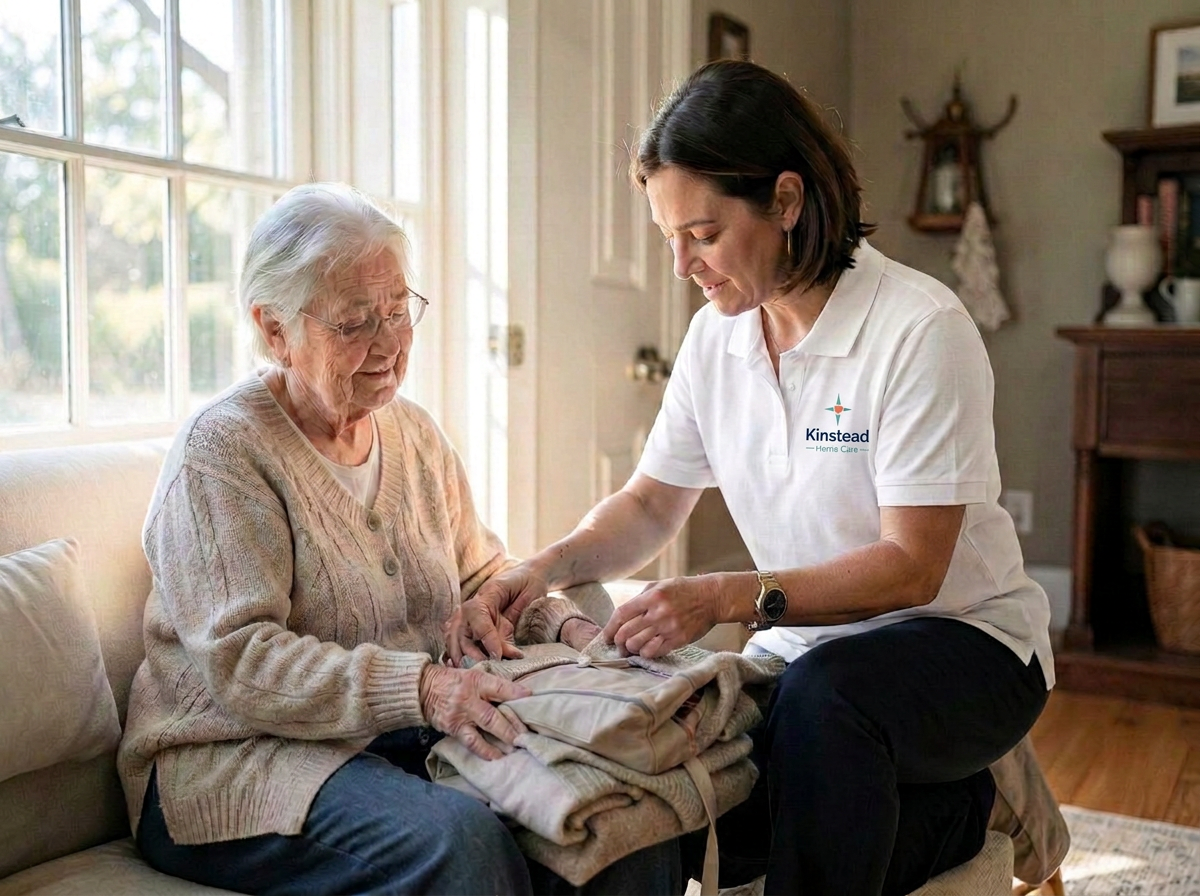
Recovery care
Support for the first weeks at home after a hospital stay or surgery, when the house suddenly feels harder to manage.
Read more about recovery care
In-home care
Personal care, meals, mobility, housekeeping, errands and transport. The ordinary things that keep someone at home.
Read more about in-home care
Companion care
Conversation, supervision, check-ins, meals and rides, with the same caregiver and a note after each visit.
Read more about companion care
Memory care at home
Steady, familiar support for someone living with dementia, in the rooms and routines they already know.
Read more about memory care at homeWhy a pharmaceutical scientist started this
The doctor's schedule is only as good as the day it lands in
Most of what goes wrong in the first weeks at home is not dramatic. A dose gets taken at the wrong end of the day. Appetite drops and nobody says anything for a week. Someone stops using the walker indoors because the hallway feels short.
Our caregivers follow the schedule the doctor set, notice when something looks different, and report it to you the same day. Kinstead does not manage medications. We remind, we observe, and we tell you plainly what we saw.
That habit of writing down what actually happened, rather than what was supposed to happen, is the part our founder brought from the pharmacy bench.
What our caregivers may and may not do
May do
- Personal care: bathing, showering, dressing, grooming, toileting and continence support
- Companion care: conversation, social time, supervision and regular check-ins
- Meal preparation, hydration reminders and assistance with eating for someone who can swallow safely
- Light housekeeping, laundry, dishes and general household upkeep
- Transportation and escorted support for appointments, errands and community outings
- Medication reminders that follow the prescriber's schedule, with same-day reporting
- Respite care for family caregivers, from a few hours to overnight cover
- Recovery support after a hospital stay, plus steady day-to-day support for someone living with dementia
May not do
- Two-person or mechanical-lift transfers
- Feeding anyone with a swallowing risk, and never by tube
- Nursing, therapy, wound care, injections or medication administration
- Any case that needs more than one trained caregiver can safely manage
The Kinstead Way
Four steps, and you can stop at any one of them.
- 01
Listen and assess
A visit at home, at no charge and with no obligation. We meet your parent, look at the house, read the discharge paperwork, and ask what a normal day actually looks like.
- 02
Design the plan
A written plan in plain language: what we do, when, what we don't do, and who to call. You see it before anything starts.
- 03
Match with care
We pair a caregiver on temperament as much as skill — pace, humor, how much conversation someone actually wants, and the practical things like language and driving.
- 04
Evolve together
We review the plan every ninety days, or the moment something changes. Plans should move up and down. There is no contract holding you at a level you have outgrown.
What you can count on
Four promises we make to every family
A familiar face, every visit
We match one caregiver to your family and keep them there. When they are away, you hear who is coming and why, before the day arrives.
You hear from us the same day
If appetite, balance, mood or sleep looks different, you get a call or a message that day. Not at the end of the month.
Honest when we are not the right fit
If a situation needs hands-on help we cannot safely give, we will tell you on the first call and point you to someone who can.
No minimum contract
Hours go up, down or stop as the recovery changes. You are never locked into a schedule that stopped fitting.
Asked on the first call
The questions families ask before anything else
You are allowed to ask about money, timing and fit before you tell us anything personal. Here are the honest answers, in advance.
Read all the questions- What does it cost?
- Cost depends on how many hours you need and when. We quote you a plain hourly rate on the first call, before any visit, and there is no charge for the visit at home.
- How quickly can you start?
- After a hospital discharge we can usually begin within 24 hours. For a non-urgent start, most families begin within a few days of the home visit.
- What if we don't click with our caregiver?
- Fit matters more than credentials. Tell us and we'll change the match within 24 hours, with no awkwardness and no explanation needed.
- Can we start small?
- Yes. Many families begin with a few hours twice a week and add hours only when it is clear they help.